
The websites of energy providers are struggling to cope with a deluge of traffic on “bleak Friday”, as the largest increase in gas and electricity prices in living memory takes effect on the same day as scheduled rises to taxes and household services.
Customers in Great Britain seeking cheaper energy bills had been advised to submit meter readings online before Friday’s 54% increase, as the average annual bill rises to £1,971, putting unprecedented pressure on the websites of suppliers.
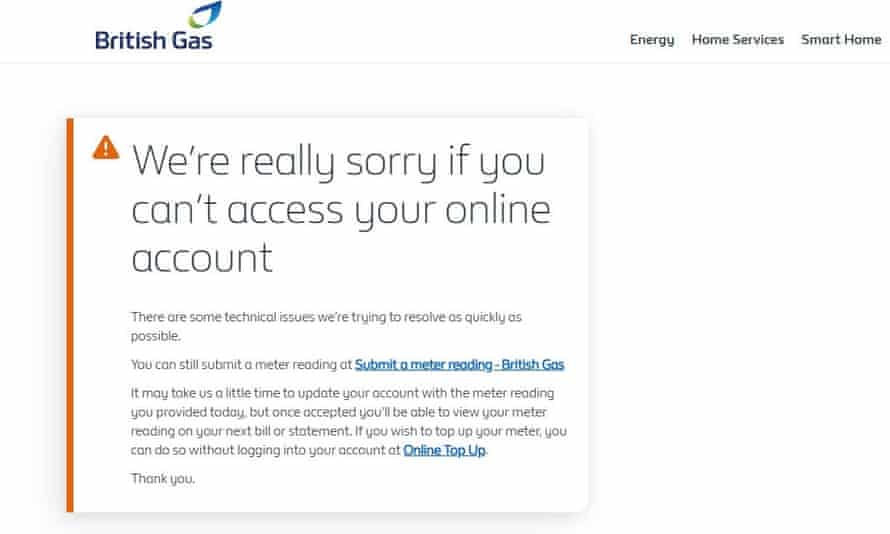
The meter reading page of British Gas, one of the UK’s biggest suppliers, was displaying an error message on Friday morning, while E.ON and EDF were also battling outages.
Households face multiple price increases from 1 April, from council tax and VAT on pints of beer to broadband and phone bills, all adding to the cost of living crisis, with inflation forecast to hit a 40-year high this year.
As snow and hail fell across the UK this week, families and pensioners spoke of having to turn off the heating and disconnect broadband to afford the rising cost of food.
However, those with prepayment meters who stop using them will still find they are running up gas and electricity bills because of rising weekly standing charges of up to £6.15, despite having no power for heating, light or cooking.
From today people on prepayment meters who run out of money and disconnect themselves from electricity or gas will find their electric meter will still be ticking up at £3.53 a week standing charge and the gas meter at £2.62 – £6.15 a week to be without heat, light, or cooking.
— Paul Lewis (@paullewismoney) April 1, 2022
The Resolution Foundation thinktank said the number of households in England in “fuel stress” had doubled overnight, from 2.5m to 5m.
The Trades Union Congress (TUC) called for an emergency budget to help working families who were at “breaking point”, as Citizens Advice estimated that about 5 million people would be unable to pay their energy bills from this month.
The TUC said the measures announced by the chancellor, Rishi Sunak, in last week’s spring statement were “woefully inadequate”, as UK households faced the biggest fall in living standards since the 1950s.
“People shouldn’t be struggling to cover the basics but millions of families have been pushed to the breaking point by spiralling bills and soaring inflation,” said Frances O’Grady, the general secretary of the TUC.
“This is a living standards emergency. Rishi Sunak must come to parliament and present an emergency budget. We need a proper package of economic support for families. Britain faces the worst living standards crisis in generations. We need an emergency budget to bring down energy bills and to boost pay, universal credit and pensions.”
Sign up to the daily Business Today email or follow Guardian Business on Twitter at @BusinessDesk
Energy bills would rise 10 times faster than wages this year, said the TUC, as it joined the Labour party in calling for a windfall tax on the billions in profits made by oil and gas companies to pay for its proposed package of support measures.
“People don’t want a revolution, they do want to know how to pay their energy bills,” said the Labour leader, Keir Starmer, during an interview on Friday morning.
Citizens Advice warned that the number of people unable to pay their energy bills would rise to one in four across the UK, more than 14 million, if the energy cap rises by the amount forecast in October.
Experts have said the war in Ukraine could drive annual bills to £3,000 at the next price cap decision.
“We understand that people are struggling with the rising cost of living – we can’t shield everyone from the global challenges we face but we’re putting billions of pounds back into the pockets of hard-working families across the UK,” a government spokesperson said.
“We are taking action worth over £22bn in the next financial year to help people with the cost of their energy bills and to ensure people keep more of their money.”
from WordPress https://ift.tt/IoUKEHW
via IFTTT



0 Comments